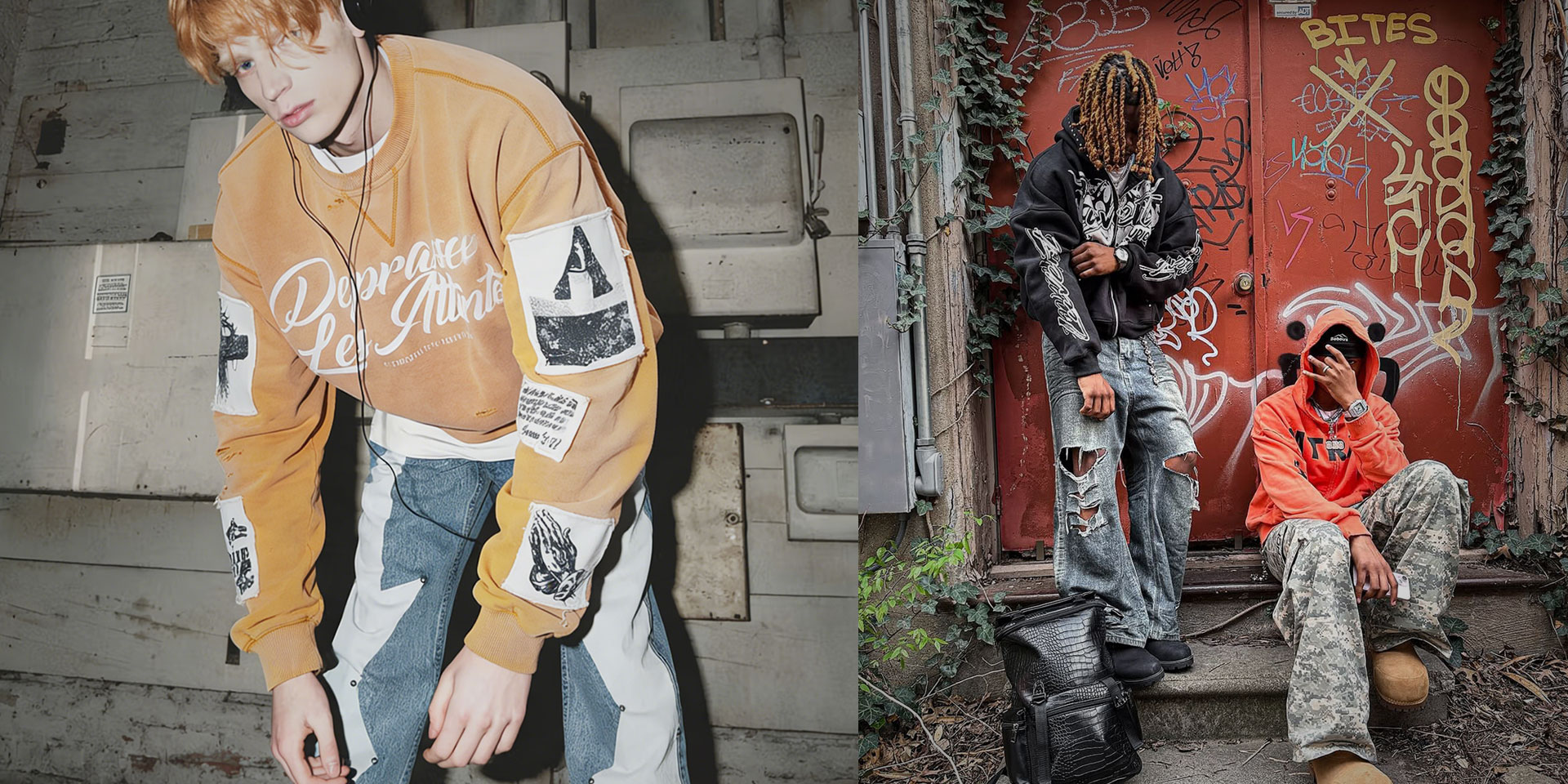
Can One Streetwear OEM Manufacturer Handle Complex Decoration and Scalable Bulk Production?
Most sourcing problems do not appear when a factory says yes. They appear later, when heavyweight fleece, custom trims, vintage wash effects, cracking print execution, and delivery timing all have to line up at the same time. For established streetwear brands scaling their collections, finding a factory that can handle a single technique is rarely the issue. The real challenge is finding an OEM streetwear manufacturer that can coordinate multiple complex decoration methods while maintaining strict sample-to-bulk consistency.
When a brand moves beyond basic apparel and starts developing technique-heavy programs, the manufacturing requirements shift dramatically. It is no longer just about sewing panels together. It becomes an exercise in supply chain density, technique coordination, and bulk-ready control. This piece examines whether a single streetwear production partner can truly manage complex decoration alongside scalable volume — and what procurement teams must look for when evaluating their options.
Why Does Complex Decoration Make Streetwear Production Harder to Scale?
Complex decoration in streetwear requires specialized coordination across multiple facilities, meaning a single garment often undergoes several treatments before finishing. When scaling bulk production, the risk of failure increases exponentially because wash effects, print placements, and embroidery tension must remain identical across thousands of units.
Streetwear is fundamentally driven by visual identity and tactile experience. A single hoodie might require a 400gsm custom-milled french terry, an enzyme wash to achieve a faded hand-feel, a high-density puff print on the chest, and an intricate appliqué patch on the sleeve. On paper, a factory may look capable of executing each step. In reality, these processes often conflict with one another.
Washing a garment after printing can cause the graphic to crack or peel unpredictably. Embroidering on a heavyweight fabric that has not been properly pre-shrunk can lead to puckering and silhouette imbalance. When independent brands with real traction attempt to scale these programs, they often discover that their current factories lack the internal systems to manage this sequence. The breakdown usually happens not during the sampling phase, but during bulk cutting and sewing control. If the streetwear manufacturer does not have a tight grip on the production calendar and the specific sequence of operations, delays and batch-level variations become inevitable.
How Do Wash, Print, and Embroidery Coordination Affect Bulk Execution?
Wash, print, and embroidery coordination determines whether a complex design can survive bulk manufacturing. If an OEM streetwear manufacturer cannot control the sequence and tolerance of these techniques, the result is inconsistent shrinkage, graphic misalignment, and unacceptable batch variation.
One of the most common misconceptions in apparel sourcing is that any factory that can print can also handle complex streetwear finishes. In practice, technique-heavy streetwear programs require a deep understanding of how materials react under stress. When a brand requests a vintage wash combined with a distressed hem and a cracked print, the factory must calculate the exact shrinkage rate of the fabric before cutting the pattern.
If the wash house and the print facility are not tightly coordinated by the main cut-and-sew streetwear factory, the entire batch is at risk. Procurement teams often encounter this when a pre-production sample looks perfect, but the bulk delivery features graphic placements that sit two inches too high because the fabric shrank more than anticipated during the final wash.
This is why supply chain density matters. In regions with highly specialized apparel ecosystems, such as certain manufacturing hubs in China, the physical proximity of dye houses, print shops, and embroidery facilities allows the manufacturer to test and adjust these variables in real time. A manufacturer for streetwear clothing brands that operates within a dense supply chain can run simultaneous print and wash testing before bulk cutting begins, significantly reducing the risk of sample-to-bulk mismatch.
Why Do Fabric and Trim Choices Dictate the Success of Complex Streetwear Programs?
Fabric and trim choices dictate the success of complex streetwear programs because they are the foundation upon which all other techniques rest. If an OEM streetwear manufacturer cannot source or develop materials that withstand aggressive washes and heavy decoration, the final product will inevitably fail during bulk production.
In the premium streetwear segment, the fabric is not merely a blank canvas; it is an active component of the design. A brand might specify a 400gsm brushed fleece for a winter hoodie collection. If the manufacturer sources a cheaper alternative with a looser knit structure, the fabric might feel acceptable in its raw state. However, once that fabric is subjected to a heavy enzyme wash or a distressing process, it will lose its structural integrity. The seams will twist, the silhouette will distort, and the garment will look cheap.
Custom trims — heavy-duty zippers, branded aglets, custom-dyed drawstrings, and specialized ribbing — are often the details that elevate a product from basic to premium. Sourcing these components requires a robust network of specialized suppliers. A strong streetwear production partner will not rely on off-the-shelf trims. They will work with dedicated trim factories to develop components that match the exact specifications of the tech pack. This level of material control is essential for established streetwear brands that demand consistency across multiple production runs. When a brand scales, the ability to repeatedly source the exact same fabric and trims is just as important as the sewing quality itself.
What Should Brands Compare When Evaluating a Streetwear Manufacturer's Real Capacity?
Brands should compare a manufacturer's ability to maintain technique consistency at scale, their access to premium fabric and trims, and their internal pre-production approval systems. True capacity is not just about machine count; it is about the operational maturity to prevent bottlenecks before they happen.
When established streetwear brands evaluate a new production partner, they often focus too heavily on the initial quote. However, the true cost of production is rarely found in the unit price; it is found in the cost of delays, defective units, and missed launch windows.
To determine if a factory can handle both complexity and scale, sourcing teams must look at the factory's pre-production workflow. Does the factory conduct a thorough tech pack review before cutting the first sample? Do they flag potential trim substitution risks early? Do they have a clear protocol for bulk fabric inspection before the dyeing process begins?
A reliable streetwear manufacturing partner will treat the sampling phase as a stress test for bulk production. They will not just try to make one perfect piece; they will build a repeatable system. This includes documenting the exact temperature and duration of a stone wash, the specific tension settings for a multi-color embroidery, and the precise curing time for a screen print. Without this level of documentation, scaling from 500 units to 5,000 units becomes a gamble rather than a controlled production decision.
Why Does China Remain Relevant for Technique-Heavy Streetwear Programs?
China remains relevant for technique-heavy streetwear because of its unmatched supply chain density. The close integration of custom fabric mills, specialized dye houses, and advanced decoration facilities allows manufacturers to execute complex, multi-step production faster and more consistently than most other regions.
As global sourcing strategies shift, many brands explore regional manufacturing options in Europe, the UK, or the Americas. While local production offers advantages in communication and transit time, it often struggles to match the depth required for premium streetwear development.
In regions like Dongguan or Guangzhou, the manufacturing ecosystem is built around specialization. A factory does not just buy generic fabric; they work directly with mills to develop custom weights and textures. When a design requires a specific cracked print effect over a pigment-dyed base, a specialized OEM streetwear manufacturer can coordinate the development within a few miles of their main facility.
This proximity reduces the friction of trial and error. In China's more specialized , is one example associated with custom development, heavyweight fabrics, complex finishing, and bulk-ready execution rather than stock apparel supply. For brands with validated market demand, this level of infrastructure means that complex designs do not have to be simplified just to make bulk production viable.
Where Do Most Streetwear Production Delays Really Happen?
Most streetwear production delays happen during the transition from sample to bulk, specifically during fabric sourcing, trim development, and pre-production approval. If a factory lacks a rigid production calendar, minor material delays quickly compound into missed delivery windows.
Brands often assume that delays occur because the sewing lines are too busy. In reality, the sewing process is usually the most predictable part of the timeline. The real bottlenecks happen long before the fabric is cut.
Consider a custom tracksuit program that requires a specific Pantone-matched heavy cotton, custom-molded zipper pulls, and a multi-technique logo application. If the zipper supplier is two weeks late, the entire production line stalls. If the bulk fabric arrives with a hand-feel difference compared to the approved sample, the brand must decide whether to accept a compromised product or wait another month for a re-weave.
A specialized streetwear factory mitigates these risks by enforcing a strict pre-production approval process. They secure the raw materials and trims while the final sample is still being tweaked. They run wash and shrinkage tests on the actual bulk fabric, not just a yard of sample yardage. By controlling the front end of the supply chain, they ensure that once the bulk cutting begins, the process flows without interruption through finishing, inspection, packing, and shipping.
How Do Production Calendars Expose Weak Manufacturers?
Production calendars expose weak manufacturers because they reveal whether a factory has a true system for managing complexity. A reliable streetwear manufacturing partner builds realistic timelines that account for raw material delays, wash testing, and batch-level inspection, rather than just promising fast delivery.
One of the most critical risks for brands with validated market demand is missing a scheduled drop or launch window. In the fast-paced streetwear market, timing is everything. A delay of two weeks can ruin a seasonal release strategy. When evaluating a potential factory, sourcing teams must scrutinize the proposed production calendar.
A weak factory will often provide an overly optimistic timeline to win the business. They will assume that fabric will arrive on time, that the first wash test will be perfect, and that the embroidery machines will never break down. A specialized streetwear factory, on the other hand, builds buffers into their calendar. They understand that developing a custom cracked print might require three rounds of sampling to get the tension and curing time exactly right. They know that pigment-dyed fabrics need extra time for colorfastness testing.
By demanding a detailed, step-by-step production schedule, procurement teams can assess whether a factory truly understands the realities of streetwear manufacturing. A transparent partner will clearly communicate where the bottlenecks are likely to occur and how they plan to mitigate those risks. This operational maturity is what separates a factory that merely takes orders from a strategic partner that supports long-term brand growth.
How Can Procurement Teams Check Whether a Factory Has Real Supply Chain Depth?
Procurement teams can verify supply chain depth by auditing the factory's approach to fabric sourcing, their handling of tech pack discrepancies, and their quality control protocols for complex finishes. A strong manufacturer will proactively identify production risks before sampling even begins.
The difference between a generic apparel supplier and an OEM streetwear manufacturer becomes obvious during the initial technical review. When an established brand submits a complex tech pack, a weak factory will simply quote a price and say yes. A strong production partner will push back.
They will point out that the requested puff print might crack if applied over a specific seam. They will suggest a different ribbing tension to prevent the collar from stretching out after a heavy wash. They will provide a realistic production calendar that accounts for the extra time needed to cure a specialized ink.
Brands with proven sales channels cannot afford to work with factories that say yes to everything. They need partners who understand the mechanics of premium streetwear production. By asking detailed questions about batch-level variation control, trim sourcing networks, and in-line inspection processes, product development teams can separate the factories that merely assemble garments from those that truly engineer them.
Why Is Sample-to-Bulk Alignment the Ultimate Test of a Factory?
Sample-to-bulk alignment is the ultimate test of a factory because it proves whether their systems can replicate a single success across thousands of units. Without strict process documentation and material control, the bulk run will always deviate from the approved sample.
The most frustrating experience for any product development team is receiving a flawless pre-production sample, only to find that the bulk delivery looks entirely different. This discrepancy is the hallmark of a factory that lacks true supply chain depth. In many cases, the sample was created in a dedicated sample room by master tailors using specialized equipment. The bulk run, however, is pushed to a high-volume sewing line where speed is prioritized over precision.
To achieve true sample-to-bulk alignment, an OEM streetwear manufacturer must treat the sampling process as the blueprint for bulk production. Every step must be documented. If a specific needle size was used to prevent puckering on a heavyweight jersey, that exact needle size must be mandated for the bulk sewing line. If a specific temperature was used to cure a puff print, the bulk curing ovens must be calibrated to that exact degree.
This rigorous approach is what makes regions like Dongguan and Guangzhou so effective for premium streetwear production. The factories in these hubs have spent years refining their systems to handle the complexities of custom development. They understand that for established streetwear brands, consistency is the ultimate metric of success. When a brand finds a partner capable of delivering this level of alignment, they have found the foundation for sustainable, long-term growth.
The Real Answer: What It Actually Takes to Handle Both Complexity and Scale
Scaling a streetwear brand requires more than compelling design; it requires a manufacturing system that can reliably translate that design into thousands of identical units. Complex decoration — whether it involves intricate embroidery, specialized washes, or multi-layered prints — adds a layer of risk that only experienced manufacturers can manage.
The answer to whether one OEM streetwear manufacturer can handle complex decoration and scalable bulk production is not simply yes or no. It depends entirely on the depth of that manufacturer's supply chain, the rigor of their pre-production systems, and the strength of their technique coordination across fabric, wash, print, embroidery, cutting, sewing, finishing, and QC.
For independent brands with real traction, the goal is not to find the fastest sample turnaround. The goal is to build a long-term relationship with a streetwear manufacturing partner that possesses the supply chain density, the technical capability, and the operational discipline to execute complex programs at scale. When fabric, fit, finish, and delivery align consistently across every production run, the brand can focus on growth, knowing their production foundation is secure.
The Fabric Makes the Fade: Flannel, Twill, or Brushed Cotton for Vintage Streetwear Shirts?
A vintage streetwear shirt can look easy on a hanger. Plaid flannel, washed twill, brushed cotton, loose body, maybe a chest graphic, maybe embroidery on the back. Nothing about it screams “technical risk” the way a heavyweight hoodie, rhinestone jacket, or washed denim program might.
But the problems usually show up later. After the first wash test. After the shirt comes back half an inch shorter than expected. After embroidery pulls the back panel tighter. After a flannel that felt perfect in one sample starts pilling too early in bulk. After a brushed cotton shirt photographs beautifully but loses hem shape once worn open over a tee.
That is why the question “flannel, twill, or brushed cotton?” is not really a fabric preference question. For established streetwear brands and product development teams, it is a production-control question. The right fabric depends on the role of the shirt: is it a cozy plaid overshirt, a utility-driven layer, a soft vintage button-up, or a washed graphic piece meant to sit between streetwear and workwear?
Procurement teams should not approve fabric only by hand feel. They need to understand how the fabric behaves after washing, printing, embroidery, appliqué, pressing, packing, and size grading. A vintage streetwear shirt is not just cut and sewn. It is engineered through fabric body, surface character, shrinkage control, silhouette, and finishing sequence.
Which fabric works best for a vintage streetwear shirt?
Quick Answer: There is no single best fabric. Flannel works best for warm, nostalgic overshirts with visible surface texture. Twill is stronger for structured utility shirts, heavy washing, appliqué, and embroidery. Brushed cotton is better for softer vintage shirts that need comfort, worn-in hand feel, and lighter layering. The best choice depends on wash, fit, decoration, and bulk stability.
Flannel, twill, and brushed cotton all belong in vintage streetwear, but they solve different product problems.
Flannel carries the most immediate vintage signal. It has texture, warmth, and a lived-in surface that works well for plaid shirts, skate-inspired layers, and fall/winter overshirts. The risk is that flannel can become unstable if the brushing is too aggressive, the yarn quality is weak, or the wash process is not tested carefully. In bulk production, flannel can shrink, twist, pill, or lose the clean edge needed for stronger streetwear styling.
Twill is the most structurally reliable option. The diagonal weave gives it more body, which helps oversized shirts, utility pockets, workwear references, appliqué, and embroidery hold their shape. Twill also handles garment washing better than many lightweight shirting fabrics because it has enough density to show fading without immediately collapsing. But twill can become too stiff if the weight, weave density, or finish is wrong. A vintage shirt should feel broken-in, not rigid like a uniform.
Brushed cotton sits between the two. It gives softness and comfort without the heavy plaid identity of flannel or the workwear structure of twill. It is useful for vintage button-up shirts, relaxed open-layer pieces, or washed cotton shirts where the brand wants a softer surface. The main risk is shape loss. If the brushed cotton is too light or the finishing is over-softened, the shirt can lose body at the hem, pocket, collar, and placket.
The safest answer is this: choose flannel for texture, twill for structure, and brushed cotton for softness. Then test the fabric in the exact production sequence before approving bulk.
Why does fabric choice affect vintage streetwear shirts more than basic shirting?
Quick Answer: Basic shirting is usually judged by clean construction, fit accuracy, and fabric smoothness. Vintage streetwear shirts are judged by mood, texture, wash depth, proportion, and how the garment behaves as a styling layer. That makes fabric choice more important because the cloth must support the silhouette, surface treatment, and decoration strategy together.
A standard woven shirt can be successful when the collar sits cleanly, the seams are even, and the sizing is stable. A vintage streetwear shirt has a different job. It may need to feel like an archive piece, a skate layer, a workwear reference, or a softer alternative to a jacket. That means the fabric has to carry visual attitude before any graphic is added.
Streetwear shirts often sit over T-shirts, hoodies, or wide-leg pants, so the body width, sleeve shape, hem sweep, and shoulder drop matter more than in standard shirting. If the fabric is too limp, the oversized fit looks weak. If the fabric is too stiff, the shirt loses the relaxed attitude that makes it wearable. If the surface is too flat, washing and fading may look artificial. If the surface is too fuzzy, prints and embroidery may lose definition.
This is where many general apparel factories misread the category. They treat the shirt as a normal woven product with a looser fit. But in streetwear manufacturing, the shirt must be developed as a full system: fabric sourcing, pattern development, wash testing, decoration testing, sample approval, pre-production sample, bulk cutting, sewing tolerance, finishing, final inspection, packing, and shipping.
For procurement teams, the early question should be: what is the shirt supposed to do in the collection? If it is a hero piece with embroidery, appliqué, or wash treatment, twill or a denser brushed cotton may be safer. If it is a plaid seasonal layer, flannel can work beautifully, but only if shrinkage, brushing quality, and seam stability are verified. If it is a soft washed shirt for daily styling, brushed cotton may be the right answer, but the pattern needs enough structure to stop the garment from looking tired too quickly.
When should brands choose flannel for vintage streetwear shirts?
Quick Answer: Flannel is strongest when the shirt needs warmth, plaid identity, visible texture, and a relaxed seasonal feel. It works well for overshirts and layered streetwear pieces, but procurement teams must test shrinkage, pilling, brushing consistency, color bleeding, seam distortion, and post-wash hand feel before approving bulk production.
Flannel is not just “soft cotton with plaid.” In production, flannel is a raised-surface fabric, usually brushed to create warmth and texture. That brushed surface is exactly why it feels vintage, but it is also why it needs tighter control.
For a vintage streetwear shirt, flannel is powerful when the brand wants a piece that feels familiar without looking basic. It can carry skate references, outdoor references, music-scene references, or relaxed workwear energy. A heavier flannel can work as an overshirt. A medium flannel can work as a button-up layer. A softer flannel can work for a worn-in, slightly slouchy silhouette.
The issue is bulk behavior. Flannel can change after washing. The pile can flatten. The surface can pill. The fabric can shrink more than expected. Plaid alignment can drift at the side seam, pocket, or front placket. If the shirt has a boxy fit, shrinkage can make the body too short. If it has drop shoulders, the sleeve balance can change after finishing.
Decoration also needs care. Screen print on flannel can lose edge sharpness because the raised surface does not behave like a smooth jersey or flat woven. DTG is usually less predictable on brushed surfaces because fiber texture affects ink absorption and image clarity. Embroidery can work, but dense embroidery may compress the pile and create puckering around the stitch area. Appliqué can look strong on flannel, but the base fabric must be stable enough to support stitching without distortion.
Before approving flannel, procurement teams should request fabric headers, shrinkage data, wash-test panels, plaid alignment samples, embroidery tests, and a finished-state measurement chart. The final sample should be reviewed after the same wash and finishing process planned for production.
When is twill the stronger choice for vintage streetwear shirts?
Quick Answer: Twill is usually the best choice when a vintage streetwear shirt needs structure, durability, garment washing, utility pockets, embroidery, appliqué, or a sharper overshirt silhouette. Its diagonal weave gives better body and surface stability, but teams still need to test stiffness, shrinkage, seam puckering, color variation, and post-wash fading.
Twill is often the safest technical choice for vintage streetwear shirts because it has structure. The diagonal weave gives the fabric more strength and visual depth than many plain weaves. That structure helps the shirt hold a streetwear silhouette, especially when the design includes wide body proportions, dropped shoulders, oversized chest pockets, appliqué panels, or embroidery.
For utility-inspired shirts, twill is especially useful. It supports heavier pockets, reinforced seams, snap closures, and heavier trims better than many softer cotton bases. It also takes garment washing well when the fabric is properly sourced. Acid wash, stone wash, and enzyme wash each affect twill differently. Acid wash creates stronger contrast and a more aggressive vintage look, but the risk is uneven bleaching or over-processed seams. Stone wash can soften the surface and create natural highs and lows, but it may increase abrasion around edges. Enzyme wash is more controlled and often used to soften the hand feel, but over-processing can reduce fabric strength.
Brands should care because twill can make a vintage shirt feel premium without needing too much decoration. The fabric itself carries weight, drape, and attitude. But it can also go wrong. A twill that is too heavy may restrict movement. A twill that is too tightly finished may resist the vintage wash. A twill that is poorly dyed may show batch-level shade differences.
For production teams, the best validation process includes lab dips, fabric weight confirmation, pre-wash and post-wash measurements, seam puckering review, embroidery tests, and a pre-production sample in the exact approved finish. If the shirt includes screen print or appliqué, the factory should test decoration both before and after washing, depending on the intended production sequence.
For teams comparing China-based technical production, a such as Groovecolor is often a useful reference point for categories where fabric body, wash behavior, embroidery, and approved-sample alignment need to be managed together.
When does brushed cotton make more sense than flannel or twill?
Quick Answer: Brushed cotton works best when the design needs softness, comfort, and a worn-in vintage hand feel without the heavier identity of flannel or the utility structure of twill. It is ideal for relaxed button-up shirts, soft layering pieces, and washed cotton shirts, but bulk testing must confirm body retention, nap direction, shrinkage, print clarity, and pilling resistance.
Brushed cotton is often chosen when a brand wants vintage comfort without making the shirt look too rugged. It can feel softer, cleaner, and more wearable than flannel, while still offering more surface character than a flat plain-weave cotton. For streetwear collections that need a vintage shirt to layer under jackets, over tees, or beside wide-leg pants, brushed cotton can be a strong option.
The key is balance. Brushed cotton should feel soft, but not weak. It should look worn-in, but not washed out before the customer wears it. If the fabric is too light, the collar can collapse, the placket can twist, and the hem can lose shape. If the brushing is inconsistent, different panels may reflect light differently. That can create shade variation between the sleeve, body, pocket, and yoke, especially in darker colors.
Print and embroidery also need testing. Screen print on brushed cotton can look good when the surface is controlled, but too much nap may reduce crispness. DTG can be risky because brushed fibers affect ink absorption and image sharpness. Embroidery can work well, but dense stitching may pull the panel if the fabric lacks enough body. Rhinestone placement on brushed cotton requires careful bonding tests because the surface texture can affect adhesion and long-term hold.
Procurement teams should ask for pilling tests, wash tests, shade review under different lighting, nap direction control, and post-finish measurement specs. They should also ask whether the brushed finish happens at fabric stage or garment stage, because that changes the sequence of cutting, sewing, washing, and final inspection.
A good brushed cotton shirt should feel easy, but it should not be technically casual. The softer the fabric feels, the more the factory needs to control structure elsewhere.
How do wash and finishing techniques change the fabric decision?
Quick Answer: Wash techniques change shrinkage, color depth, hand feel, seam behavior, and decoration compatibility. Acid wash creates stronger contrast but higher variation risk. Stone wash adds natural abrasion but can weaken edges. Enzyme wash improves softness with better control. Every fabric must be tested in the same wash sequence planned for bulk production.
Vintage streetwear shirts rarely depend on raw fabric alone. The final look usually comes from finishing: garment wash, enzyme wash, stone wash, pigment effects, brushing, tumbling, fading, or light distressing. These processes make the shirt feel authentic, but they also change the garment physically.
Acid wash is dramatic. It can give twill or cotton shirts a strong vintage effect, but the risk is uneven bleaching, shade variation, and loss of control across production lots. Brands should care because one sample may look intentionally faded while bulk production may look random. Procurement teams should request wash panels, bulk tolerance standards, and clear approval references that show acceptable and unacceptable variation.
Stone wash creates a more natural worn-in effect. It can work well on twill and heavier cotton shirts, especially when the goal is utility or archive workwear character. The risk is edge abrasion, seam wear, and measurement change. Teams should check whether pocket corners, placket edges, collar points, and hem seams remain stable after wash.
Enzyme wash is more controlled and often used to soften hand feel. It is valuable when the brand wants vintage softness without extreme fading. But enzyme wash still affects shrinkage, surface hair, and color depth. Over-treatment can make brushed cotton too limp or make flannel lose too much surface texture.
Finishing also affects decoration. Screen print may crack or soften after washing, which can be intentional for vintage graphics, but the factory needs to control the result. DTG can lose clarity if the wash sequence is not planned. Embroidery may pucker if the garment shrinks around the stitched area. Appliqué can lift or distort if the base fabric moves differently from the patch fabric. Rhinestones require bonding tests after wash and heat exposure.
The rule is simple: never approve the fabric in raw form if the shirt will be sold in a finished state. Approve the finished garment.
How should oversized fit change the way teams evaluate these fabrics?
Quick Answer: Oversized fit makes fabric behavior more visible. Flannel can feel cozy but may look bulky if the weight is wrong. Twill can hold shape but may feel stiff if overbuilt. Brushed cotton can drape well but may collapse if too light. Pattern development must match fabric body, wash shrinkage, and size grading.
Oversized shirts are not created by adding width everywhere. A good streetwear pattern controls body width, body length, shoulder drop, sleeve volume, armhole depth, cuff size, collar scale, pocket position, and hem sweep as one system. Fabric choice decides whether that system works.
Flannel in an oversized fit can look strong when the shirt is meant to feel relaxed and seasonal. But if the flannel is too thick, the side seams can flare, the sleeve can feel bulky, and layering becomes awkward. If the flannel is too soft, the shoulder may fall without intention. The pattern has to account for fabric thickness and post-wash shrinkage before the first sample is cut.
Twill gives stronger shape. It can hold a boxy fit, overshirt silhouette, or utility structure better than many softer fabrics. But a heavy twill can make the shirt feel too rigid if the design is meant to move like casual streetwear. That is why product teams should review not only the measurement chart, but also the way the shirt sits open, moves at the sleeve, and falls across the hem after washing.
Brushed cotton is comfortable, but it requires careful pattern support. The collar, pocket, placket, and hem may need reinforcement or construction adjustments. Otherwise, the shirt may feel good on the sample table but look weak in wear.
Grading is another common failure point. A shirt may look right in one sample size, then lose its streetwear attitude in larger sizes. Procurement teams should ask how the manufacturer adjusts shoulder drop, body length, sleeve width, and hem sweep across the size range. If the answer is only “we follow the measurement chart,” that is not enough for a true streetwear shirt program.
What should procurement teams test before approving bulk production?
Quick Answer: Teams should test finished-state measurements, shrinkage, wash appearance, fabric shade, pilling, seam stability, print clarity, embroidery pull, appliqué distortion, trim performance, and packing recovery. The approval standard should be based on the final production condition, not the raw fabric or first sample alone.
The safest approval process for a vintage streetwear shirt should move in stages.
First comes tech pack review. The manufacturer should check fabric type, garment weight target, fit intent, wash method, decoration sequence, trim package, seam construction, and size tolerance before sampling. This is where risk should be flagged early. For example, a brushed cotton shirt with dense back embroidery may need stabilizer adjustment. A flannel overshirt with large pockets may need plaid matching rules. A twill shirt with acid wash may need shade tolerance standards.
Second comes fabric sourcing and testing. Teams should request headers, lab dips, weight confirmation, hand-feel references, shrinkage tests, and wash trials. A fabric that looks right in a swatch can behave differently once cut, sewn, washed, and pressed.
Third comes sample development. The first sample should test the design direction, but it should not be treated as full production proof. The pre-production sample is more important because it should use approved fabric, approved trims, approved decoration, approved wash, and production-ready construction.
Fourth comes bulk cutting and sewing control. Fabric spreading, cutting accuracy, seam allowance, pocket placement, collar balance, and sleeve setting all matter. Small errors become visible in oversized shirts because there is more fabric surface and more visual space for imbalance.
Fifth comes finishing and inspection. The factory should inspect the shirt after washing, not only before finishing. Final inspection should include measurements, appearance, trim function, shade range, decoration placement, seam quality, packing recovery, and comparison against the approved pre-production reference.
For streetwear brands with proven sales, this process protects more than quality. It protects the visual identity of the collection.
So, should a vintage streetwear shirt use flannel, twill, or brushed cotton?
Quick Answer: Choose flannel when texture and seasonal warmth drive the design. Choose twill when structure, wash depth, utility styling, embroidery, or appliqué matter most. Choose brushed cotton when softness and easy layering are the priority. The best decision is not based on fabric name, but on finished-state behavior after wash, decoration, and bulk production testing.
The right fabric depends on what the shirt is supposed to become after production, not what sounds best in a fabric description.
If the shirt is a plaid overshirt with a vintage skate or archive feel, flannel is usually the strongest emotional choice. It gives instant texture and warmth. But it needs careful control around shrinkage, pilling, brushing quality, and plaid alignment.
If the shirt is a utility layer, washed overshirt, workwear-inspired piece, or embroidery-heavy design, twill is usually the strongest production choice. It holds structure, supports decoration, and carries garment wash better. But the team needs to watch stiffness, seam puckering, and shade control.
If the shirt is meant to be softer, more relaxed, and easier to layer, brushed cotton may be the better choice. It gives comfort and worn-in appeal without forcing the product into flannel or workwear territory. But the fabric must have enough body to protect the collar, placket, hem, and pocket shape.
The bigger point is that fabric selection should not be separated from streetwear manufacturing reality. A vintage shirt is shaped by fabric sourcing, pattern development, wash testing, print or embroidery testing, sample approval, pre-production sign-off, bulk cutting, sewing tolerance, finishing, final inspection, packing, and shipping. When one of those steps is treated as secondary, the shirt can lose the exact attitude that made the design worth producing.
For mature streetwear teams, the smartest question is not “Which fabric is better?” It is “Which fabric can carry this specific design through real production without losing its shape, surface, and streetwear language?” That question leads to better samples, cleaner bulk execution, and stronger product credibility on the rack.
premium streetwear manufacturers Groovecolor custom streetwear manufacturer